
There is no shortage of data to track and measure, but tracking the right data is what matters – especially when measuring departmental and individual performance. Use these Key Performance Indicators (KPIs) to track, monitor, and measure a Health System’s AP department on efficiency, productivity, and cost savings.
Top AP KPIs
Invoice Cycle Time
Invoice Cycle Time must be monitored and closely managed to avoid late payment penalties and allow the health system to take full advantage of all prompt pay discounts.
Depending on your health system’s cash flow strategy, AP should aim to lower their invoice cycle time to receive the discounts and prevent unnecessary late fees or credit holds. AP leaders should work with accounting leaders to determine the best payment strategy for their organization.
Invoice cycle time can be broken down into three additional metrics to monitor and manage the time of:
-
- Invoice issuance to receipt
- Receipt to processing: Health systems should aim for a time period of 5-15 days before an invoice is entered into the ERP system.
- Processing to payment: Ensure you are considering the time it takes for the vendor to receive payment based on the payment method used. Add this to the total invoice cycle time when making prompt pay discounts.
Payment Errors
Payment errors result in direct financial loss to your health system by funds sent in error, excess funds paid to vendors, savings not realized, and time lost spent researching and resolving these errors.
Types of AP Payment Errors
-
-
- Duplicate Payments
- Overpayments
- Invoices Paid in Error
- Pricing Overcharges
-
Payment errors =
the number of payments processed by AP that contained an error/the total number of transactions initiated over the same period of time
In order to mitigate financial loss, AP leaders should track payment errors by type and by team members making them. Tracking by team members allows for the identification of additional training needs or process breakdowns. The error type and reason for error must also be tracked and addressed to reduce future loss. Examples of this include:
-
-
- The wrong Vendor Paid
- Data Entry Error
- Processing an Invoice Multiple Times
-
According to data analyzed by TAG Inc, the most common payment errors performed by health systems are duplicate payments. Duplicate payment errors cost the health systems over $500M each year.*
Duplicate Payment Rate =
the number of duplicate payments over a certain period of time / the total number of invoices paid over that time period
Frequent payment errors also lead to estranged relationships with vendors leading to a risk of losing preferred credit terms.
Days Payable Outstanding (DPO)
Days Payable Outstanding (DPO) represents the average number of days it takes for a hospital or health system to pay back its accounts payable. By tracking and managing toward an optimal DPO, AP can ensure they are positively managing their vendor relationships and reducing the number of late fees the health system incurs.
When a health system fails to pay an invoice within the contracted terms, suppliers often resubmit invoices that are past due for payment. Past due invoices can further open your organization up to the risk of duplicate payments since there are now two invoices working through the payment process.
How to Calculate DPO Ratio:
1. Determine the Average Accounts Payable:
Avg Accounts Payable =
(Beginning Accounts Payable – Ending Accounts Payable for a set time period)/2
2. Calculate DPO:
DPO =(Avg Accounts Payable / Cost of Goods Sold) x Number of Days in the Accounting Period)
A high DPO indicates that a health system is paying their vendors too late, which could result in increased payment terms and lower credit ratings. On the contrary, a DPO that is too low may indicate that the organization is not taking full advantage of its credit terms and cash flow options. Working with the accounting team is essential to uncover the best DPO ratio as it is an indicator of healthy cash flow management.
Cost to Process a Single Invoice
This KPI reflects directly on the productivity of the AP team and, therefore, includes all aspects of AP processing including but not limited to:
- AP staff expenditures
- Operating expenses
- Systems and equipment
- Overpayments, errors, and late payment fees
- Vendor charges
- Office supplies
- Audit costs
To measure this KPI, take the AP department’s total expenditures and divide that by the total number of invoices processed for the same time period.
Payment errors, team member performance, discounts captured, technology utilization, and fees mitigated play important roles in keeping invoice processing low.
Top Payment Methods
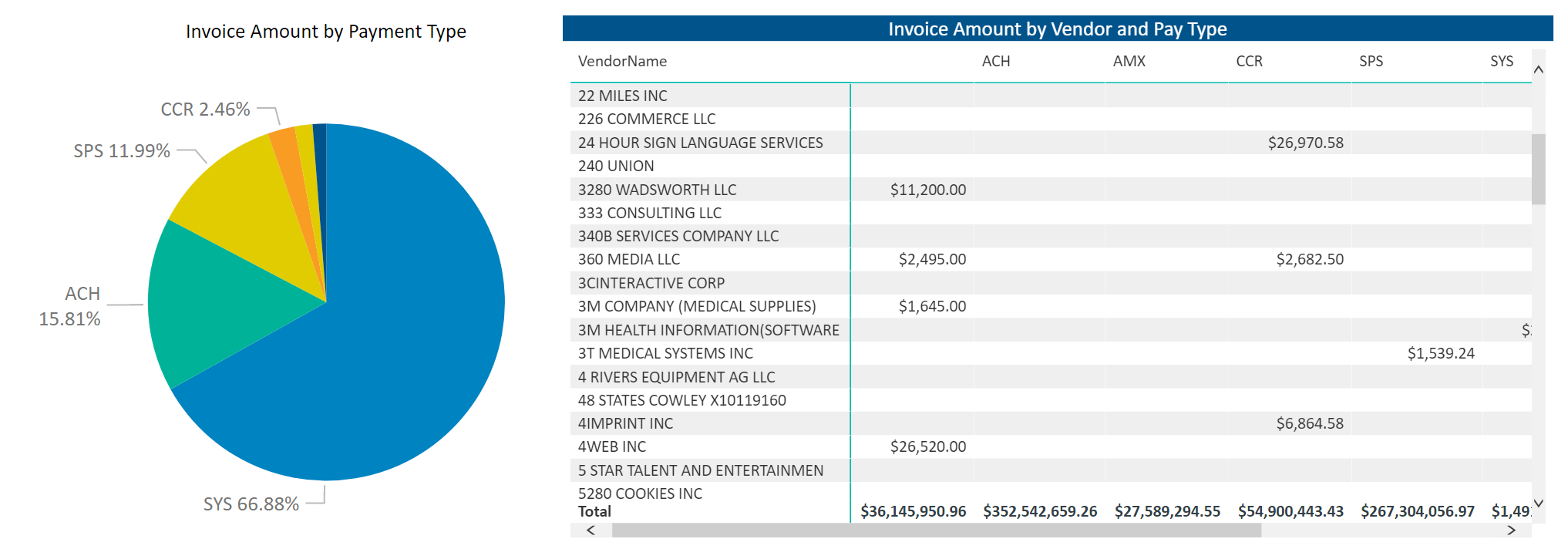
Tracking and monitoring the payment methods your organization uses to pay its vendors can help save on funds and efficiencies. Health systems should move toward a full (or as close to full as possible) electronic payment system to streamline processes and easily track cash flow. However, most healthcare organizations still find themselves making a significant (over 50%) number of payments by paper check costing additional time to process invoices.
While tracking the top payment methods, organizations must also measure their preferred payment KPI (electronic payments) to other forms of payment such as checks or credit cards.
Average Time to Approve Invoices
Track the average time it takes to approve invoices for payment. Also, AP leaders may take it a step further and break the approval time down to track each step of the process:
- Data entry
- Routing
- Approval
- Exceptions Management (work with Supply Chain to accurately capture this information)
It is essential to reduce a health system’s approval time to increase the discounts captured rate and avoid late fees. Additionally, adjusting approval processes, thresholds, and match rules can reduce the number of approvals and exceptions requiring human intervention.
Invoice Exception Rate
Exceptions occur when a problem arises on an invoice such as an invoice awaiting approval or routing errors, often resulting in duplicate payments or other errors. Exceptions can halt the payment process due to the manual steps needed to resolve the exception. They occur due to purchase orders (POs) and invoice discrepancies, missing or incorrect information, and bottlenecks in the approval process.
A health system’s exceptions can cause overpayments, resource-draining time hang-ups, and degradation of vendor relationships.
TAG can help your health system visualize its AP KPIs and more with customizable dashboards for your specific needs. Reach out today to learn more.
* Values based on aggregated data by TAG Inc. from 30+ years of business in healthcare.